Start a conversation
Our story

We changed what success looks like.

Stonepost has never been static. We started with a clear goal of building a farm that could financially support our family without off-farm income. That goal still matters, but today we also measure success by whether our management is improving soils, strengthening the landscape and creating an operation that can keep supporting our family over time.

How we got here.

Stonepost did not follow a straight line. We tried things, changed things, took on too much, learned from it and eventually got much clearer about what we wanted the farm to support.

The timeline below is less about milestones and more about the decisions that changed how we think.

2016 · Starting out

Build a farm that could support our family

When we started Stonepost, success meant being able to financially support our family without relying on off-farm income. We chose a diversified direct-to-consumer model because we believed capturing more of the value from what we produced could help a smaller land base support a family.

The early years

Learn every part of the business

We raised cattle, pigs and poultry, kept bees, grew vegetables, sold eggs, attended farmers markets and built CSA and home-delivery sales. Becky focused heavily on planning, marketing, finances, communication and systems. John managed much of the daily livestock work, rotational grazing, inventory, processing logistics, customer relationships and the constant challenge of keeping sales and cash moving.

As Stonepost grew

Complexity has a cost

Diversity taught us a lot, but every enterprise added labour, equipment, infrastructure, processing, inventory and marketing demands. We learned that being busy and paying the bills was not enough if there was little time left for life and not enough profit left to build savings or reinvest in the business.

Learning from the land

Rest, water and observation matter

Rotational grazing became one of the most rewarding parts of the farm. We learned to pay closer attention to recovery time, water conservation, forage response and how quickly drought can expose weaknesses in management. Seeing the land respond made improving soil and ecological function a bigger part of what success meant to us.

The business lesson

Time and cash flow are limiting resources

Stonepost taught us to treat time as one of the scarcest resources in the business and to streamline wherever possible. It also reinforced how important cash flow and healthy profit margins are. A farm has to keep operating today while still generating enough margin to reinvest, improve and grow.

The decision

Do fewer things, better

Eventually we knew the direct-marketing model was costing more personal time than we were willing to give it without the profits to compensate. We chose not to recreate the same complexity after moving to British Columbia. Today we would rather focus on one or two meaningful enterprises, scale them well and be much more deliberate about where our time and capital go.

Stonepost 2.0

A farm should work for you

Our definition of success still starts with supporting our family, but it now also includes regenerating soils and improving the landscape. Through Stonepost 2.0, we want to help other farmers, ranchers and homesteaders see how working with natural processes can improve both production and profitability, and build an operation that works for them rather than the other way around.

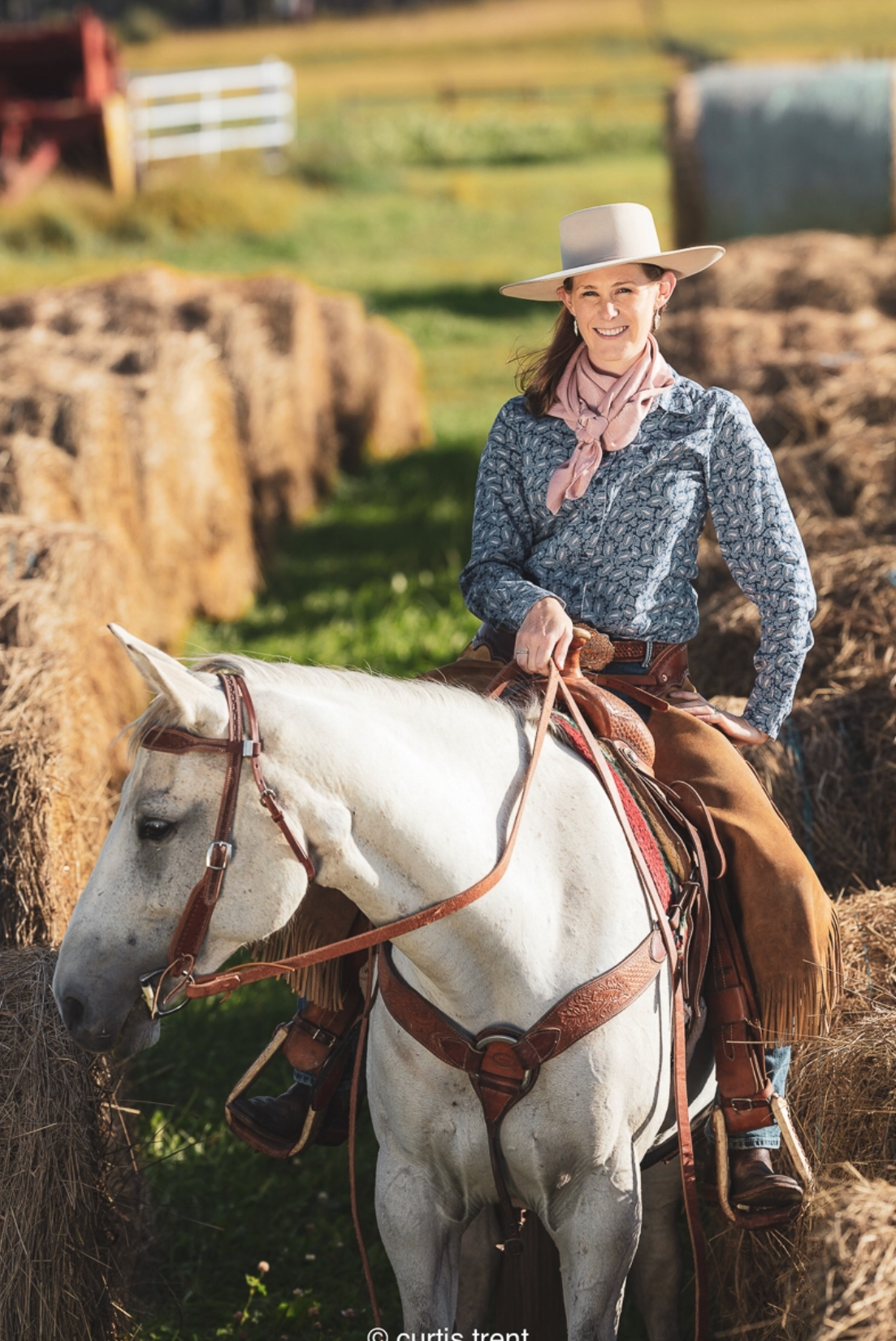
Becky Doherty at Stonepost Farms

Becky Doherty

Farmer · educator · facilitator · systems thinker

Becky grew up in the East Kootenays of British Columbia around horses, mountains and a family-run trail riding business. Horses, mountain country and entrepreneurship were part of everyday life, and from an early age she developed a strong connection to land, animals and building something of your own.

She holds a Bachelor of Science in Geography with a GIS concentration from the University of Lethbridge and a GIS diploma from Olds College. Her professional background has crossed GIS and geospatial analysis, forestry, soils and reclamation, municipal land management, agricultural research, project leadership, technology and business management.

When Stonepost began, Becky naturally took on much of the planning, marketing, financial management, communication and business development while still being actively involved in livestock, grazing and land management. That mix of practical farm experience and professional systems work has shaped the way she approaches problems today.

Seeing the whole

Becky is strongest when a problem has a lot of moving parts. She tends to zoom out, organize what is happening and look for the relationships between things that may initially seem separate: land, water, forage, infrastructure, labour, finances, technology, people and long-term goals.

Her GIS background strongly influences the way she thinks. Mapping and spatial analysis are ways of seeing relationships, patterns and constraints that are difficult to understand in a spreadsheet or from memory alone. She brings that same thinking to farm and ranch planning, whether the tool is a digital map, a grazing chart, a financial plan or a conversation at the kitchen table.

Technology as a practical tool

Technology is another area where Becky brings something different to Stonepost. She is comfortable using GIS, data, software and digital tools when they can reduce work, organize information or make a decision clearer.

Her rule is simple: technology should make the farm easier to manage, not become another thing to manage.

What Stonepost changed for her

The biggest lesson for Becky was that taking on more does not necessarily create a better farm or a better life. Stonepost's early years were full of opportunities, enterprises and ideas, but trying to be everything spread the family too thin.

Today she is much more deliberate about protecting time and energy. She is interested in helping people build systems that are profitable and effective, but also realistic for the people who have to live with them.

The part of this work she enjoys most is connecting with people and helping them work through complex situations. Her goal is not to hand someone a recipe. It is to help them understand the problem, see their options more clearly and leave with tools they can use again when the next issue comes along.

Best at
Connecting the dots when there are a lot of them.
Brings
Planning, facilitation, communication, GIS, mapping, technology, business thinking, leadership and natural-resource knowledge.
Credentials
Accredited Holistic Management Educator · EOV Monitor · Permaculture Design Certificate · B.Sc. Geography & GIS · GIS Diploma.
Usually notices
Where the pieces are disconnected, duplicated or working against the bigger goal.
Balances John with
Systems thinking, planning, technology, communication and a different way of seeing the problem.
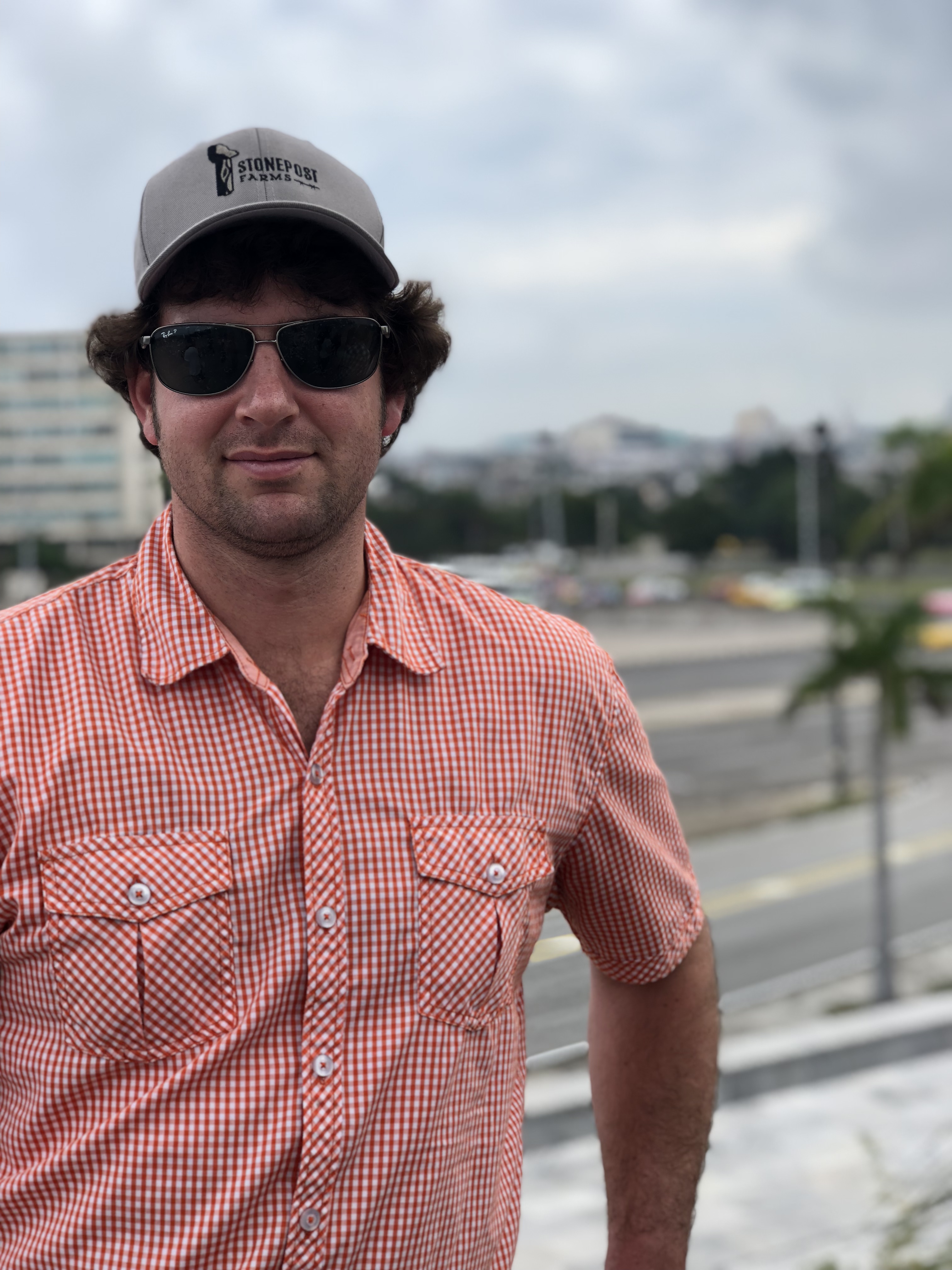
John Doherty at Stonepost Farms

John Doherty

Farmer · grazier · land manager · practical problem solver

John grew up near the village of Glenwood in southwest Alberta. When he was six, his family bought 80 acres and moved onto a small farm. His parents started with a few Holstein cows and raised orphan calves, then kept pigs for several years before transitioning into a beef cattle herd.

From the beginning, John loved being outside with the animals. He also remembers walking through fields, watching crops grow and paying attention to how land was being managed. That interest in working landscapes eventually led him to the University of Lethbridge, where he completed a Bachelor of Science with a major in Environmental Sciences.

Environmental and field experience

John chose environmental science because he wanted a career that kept him outside and connected to healthy landscapes. After university, he began in the oil and gas sector managing drilling-waste disposal, then moved into pre-disturbance site assessments and wellsite reclamation.

His professional work has included Phase I, II and III environmental site assessments, detailed site assessments, reclamation, pipeline construction monitoring and inspection, and spill response. That field background gave him practical experience reading soils, disturbances and landscapes long before he began applying those skills more directly to agriculture.

What farming means to John

John wanted to farm because he loves working outside, working with animals and growing healthy food. He also enjoys the challenge of managing a system where weather, markets, biology and other external factors are never fully under your control. For him, much of the satisfaction comes from continually learning how to manage the landscape better and create a healthier environment that can produce more good food.

At Stonepost, John's role became much broader than the physical work outside. He managed much of the daily feeding and rotational grazing, but he was also deeply involved in cash flow, product marketing, inventory, processing, deliveries and customer service.

He particularly enjoyed raising animals from day one through to the finished product, finding abattoirs that would handle the animals well and produce high-quality meat, then taking those products to customers through farmers markets, the CSA program and home delivery. The direct feedback from customers who valued both the food and the way it was raised was an important part of the work for him.

Grazing, land and low-cost problem solving

Rotational grazing has been one of John's favourite parts of farming. He enjoys managing forage resources to get as much production as possible while working with natural processes, then watching how the land responds over time.

Some of his biggest practical lessons came from the pasture rather than the classroom. He sees adequate recovery time as critical to maintaining healthy grass, water as one of the most common limiting factors, and drought as a very fast way to expose weak management. He also enjoys solving problems as inexpensively as possible, because cost constraints often force more creative and practical thinking.

When John visits another farm or ranch, he tends to notice field condition and animal condition first, along with how much care is being taken with the farmyard and overall operation.

What people ask him about

John is often asked for help with low-stress livestock handling and direct marketing. Producers want to know what worked at Stonepost, what did not, how products were priced, how they were advertised and how the farm managed the practical realities of getting food from the farm to the customer.

Ecological monitoring

John trained as an EOV Monitor because it combines several things he enjoys: working outside, seeing new landscapes, understanding how other operations function and helping producers improve both their land and their finances.

He also values the opportunity to learn from other people's experiences and mistakes, understand the context behind their decisions and share what worked, and did not work, at Stonepost.

Healthy land, to John, means full vegetation cover with a mix of desirable species that can be used by livestock and wildlife while maintaining a functioning ecosystem.

What Stonepost changed for him

If John were starting Stonepost again, he would not try to be everything for everyone. The early operation became too diversified, with too many enterprises competing for time and attention. Today, he would rather focus on one or two main enterprises and grow them to a meaningful scale that can support the family.

The clearest sign that the old direct-marketing model needed to change was when there was almost no free time for leisure, but the business was not generating large enough profits to justify what it was taking from family life.

Stonepost also sharpened his thinking about business. Time is often the most limiting resource, so operations need to be streamlined wherever possible. Cash flow keeps the business functioning day to day, while profit margins need to be strong enough to reinvest, improve the operation and create real growth.

That same practical mindset shapes how he thinks about improvements. Producers can overcomplicate change by waiting until they can build the perfect system. John would rather start with a small improvement, see what happens and use that success to build confidence for the next change.

Best at
Rotational grazing, low-stress livestock handling, practical problem solving and finding workable improvements without unnecessary cost.
Brings
Grazing, cattle, forage management, soils, environmental field work, reclamation, direct marketing, customer experience and ecological monitoring.
Credentials
B.Sc. Environmental Sciences, University of Lethbridge · EOV Monitor.
Usually notices
Field condition, animal condition and how the overall operation is being cared for.
Balances Becky with
A practical, hands-on perspective, seeing opportunities Becky may not initially see.